

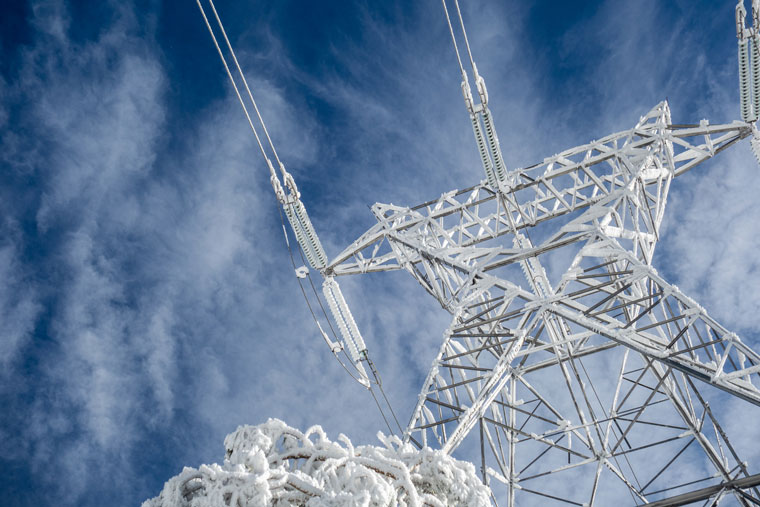




In the past week, Winter Storm Fern, with its frigid temperatures and significant ice and snow accumulations, has tested the U.S. power grid. As cold air remains across the country, power outages and icy conditions could linger longer than usual.
Forecasters at NOAA called it “an unusually large and severe winter storm”.
On January 22, the U.S. Department of Energy issued an emergency order allowing grid operators to direct data centers and other large energy consumers to use backup generation resources at data centers and other major facilities available as needed. The DOE estimated that more than 35 GW of unused backup generation remains available nationwide and said, “These actions could mitigate blackouts and reduce costs for potentially hundreds of millions of Americans during the winter storm.”
Additionally, the DOE later issued several specific regional emergency orders for the Texas, Mid-Atlantic, New England, Carolinas, and New York grids.
An article by GridBeyond highlighted how Winter Storm Fern put the nation’s power grid under pressure:
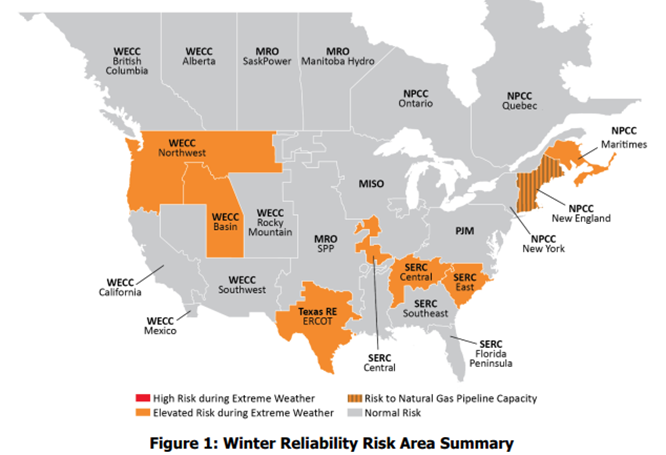
In its 2025–2026 Winter Reliability Assessment, the North American Electric Reliability Corporation (NERC) said much of North America is at an “elevated risk” of having insufficient energy supplies this winter to meet demand in extreme operating conditions. Published on November 18, the report noted that although resources are adequate for normal winter peak demand, any prolonged, wide-area cold snaps will be challenging. This is largely due to rising electricity demand, which has grown by 20.2GW (2.5%) since last winter’s forecast, significantly outpacing winter on-peak capacity. This, coupled with the changing resource mix, is affecting the winter outlook.
Generation and storage resources are growing, but at a slower rate than demand is rising. Battery and solar facilities were the leading resource types added since last winter. Total resources serving winter peak demand, including generating capacity and demand response, have increased since last winter by 9,447MW. Sizeable additions in battery resources and some new natural gas-fired generators contribute to the increase in resource capacity. But the increase is offset by lower on-peak capacity values for wind resources. As a result, generator capacity for winter peak demand makes up only a small portion of the total increase. Generation accounts for 1,335MW of the total 9,445MW increase, while the larger share comes from demand response programs.
For the ERCOT region, which was noted to be at elevated risk, the report noted that strong load growth from new data centers and other large industrial end users is driving higher winter electricity demand forecasts and contributing to continued risk of supply shortfalls. For the upcoming winter season, ERCOT is expected to continue facing reserve shortage risks during the peak load hour and high-net-load hours, particularly under extreme load conditions that accompany freezing temperatures. Elevated forced outage of thermal resources and reduced output from intermittent resources during these conditions exacerbate the risk of supply shortfalls. In winter, peak demands typically occur before sunrise and after sunset, coinciding with the unavailability of solar generation, making the system dependent on wind generation and dispatchable resources.
Data centers are altering the daily load shape due to their round-the-clock operating pattern, lengthening peak demand periods. Additional battery storage and demand-response resources since last winter help mitigate shortfall risks. But with the continued flattening of the load curve, maintaining sufficient battery state of charge will become increasingly challenging for extended periods of high loads, such as a severe multi-day storm like Winter Storm Uri.
Tagged with DOE, grid, GridBeyond